
China appears determined to upgrade Pakistan's military capabilities, sufficient to ensure local parity with India, alerts former foreign secretary Ambassador Shyam Saran.

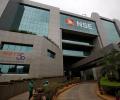
Leading stock exchanges NSE and BSE on Monday said all their operations are functioning in a normal manner after HDFC Securities flagged that confirmations were not received for orders placed in the NSE cash segment due to a "technical glitch". After mentioning about the technical glitch in a tweet at 10.01 am, HDFC Securities, at around 11.53 am, issued a statement saying the issue "got resolved at 9.50 am" and that investigation is going on to find out the root cause. The episode, which happened less than one hour after markets opened for trading, comes within days of a technical glitch forcing NSE (National Stock Exchange) to halt trading for nearly four hours on Thursday. In a statement, a NSE spokesperson said that all the operations on its platforms were "functioning smooth and normal".

Exchanges have twin roles: commercial and regulatory.

As per the latest data compiled by the World Federation of Exchanges, a total of 11.64 crore trades took place in the equity segment of NSE in September this year, making it the world's largest exchange on this category.
Delhi-based Punj Llyod Ltd was listed on the Bombay Stock Exchange and the National Stock Exchange on Friday at a premium of more than 50 per cent.
Sebi reforms to foreign investment were overdue, these changes are likely to have positive effects in the long run.

Ravi Narain, managing director and chief executive officer (CEO) of the National Stock Exchange, is set to take charge as chairman of the working committee of the World Federation of Exchanges.

The move will help in increasing transparency as well as providing correct picture of the actual shareholding of a listed company.
The stock jumped 12.9 per cent to Rs 95.80 at Bombay Stock Exchange.

Government-owned companies are more generous in rewarding their shareholders with dividends.
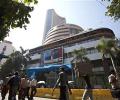
BSE will become the fourth player in currency derivatives in India

They took investor money via IPOs and then disappeared.

The bourse has received approval from the capital market regulator Securities and Exchange Board of Indian and the RBI for introducing exchange traded currency options on dollar Indian rupee spot rate, NSE said.
The move comes after CBI gets sanction to prosecute him in Aircel-Maxis case

BSE says all requirements complied with.
India VIX has been mirroring the CBOE Volatility Index.
The decision is a part of a surveillance review.
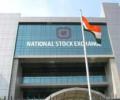
The National Stock Exchange today launched a new facility to provide stock updates on mobile phones, which the country's leading bourse hopes will help it reach out to more customers.

In a BSE filing, the company said it has filed certified copies of the Andhra Pradesh High Court order paving way for the merger with Registrar of Companies, Andhra Pradesh, Hyderabad.

In the current calendar year, small and medium enterprises (SMEs) have witnessed an impressive surge in initial public offerings (IPOs), surpassing the 2018 record. Over 150 SME IPOs have been introduced to the market, breaking the previous record of 141 set in 2018. According to data from PRIME Database, a primary market tracking firm, 147 companies successfully concluded their debut share sales by the end of October, raising a cumulative Rs 3,727 crore.

'Focus on 19,400/64,900 as the key resistance levels for the Nifty/Sensex.'
After considering the facts and circumstances of the case including enormity of the prima facie violations observed against Karvy, Sebi in an order passed late night Friday said it would not be prudent to allow the use of PoA by Karvy given to it by its clients.

Equity markets rallied after softer-than-expected inflation data in the US and UK rekindled hopes of the end of the rate-hiking cycle by major central banks. The soft inflation reading drove down bond yields and the US dollar, whetting the appetite for risky assets. The 10-year US bond yield fell below 4.5 per cent after topping 5 per cent less than a month ago.
